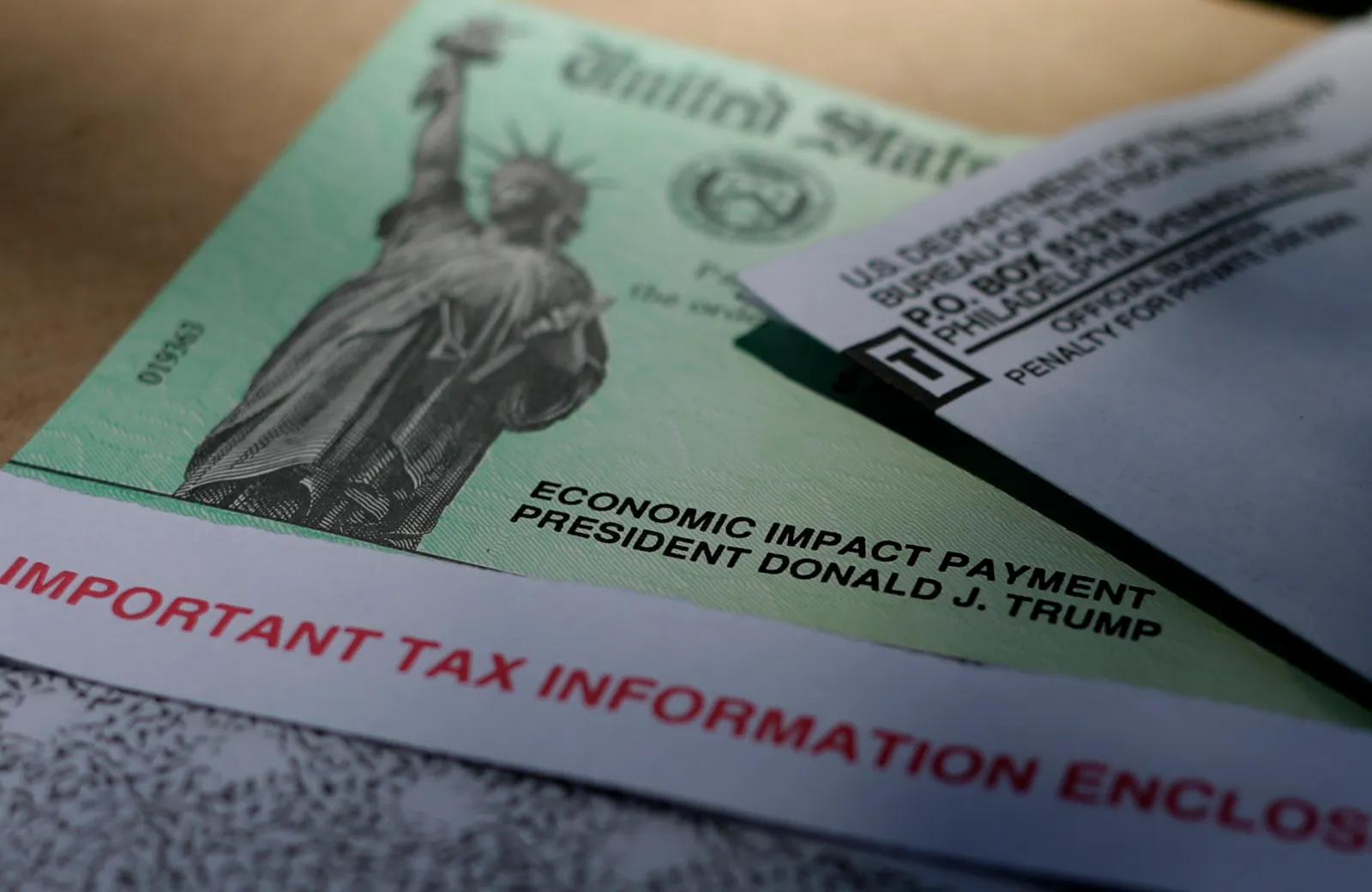

The White House said Monday that Americans are expected to receive the "largest" "tax refunds in U.S. history this filing season, citing provisions of President Donald Trump's Working Families Tax Cuts Act.
Average refunds could rise by $1,000 or more this year, with economists projecting increases from 15 percent to 30 percent compared with recent years.
Last week, Treasury Secretary Scott Bessent said Americans can expect a larger tax refund because of Trump's "One Big Beautiful Bill." During an interview on the All-In podcast, Bessent said 2026 would be a "gigantic refund year" because Americans didn't change their withholdings and the tax changes are retroactive to the beginning of 2025.



The Tax Foundation think tank estimated that the average refund check will be $3,800. That's an increase from $3,052 for the 2024 tax year and $3,004 for 2023's. Financial services company Piper Sandler projected the average refund could rise to about $4,200, though refunds will depend on each person's tax filing situation.
Some taxpayers will receive larger checks than others under the new tax law. For instance, older Americans who can claim the new $6,000 senior deduction may get a larger boost, as well as homeowners who can claim the expanded $40,000 state and local tax deduction.
Tax refunds represent the biggest payday of the year for millions of Americans, with approximately 75 percent of taxpayers receiving refunds annually.
When Tax Filing Season Begins
Americans can file their 2025 tax returns with the IRS starting January 26. The agency expects to receive about 164 million individual income tax returns this year.
About 93 percent of taxpayers filed electronically during last year's tax season.
Taxpayers have until April 15 to file their 2025 tax returns and pay any tax due.
How to Set Up Direct Deposit for Your Refund
The IRS is encouraging taxpayers to use direct deposit for the fastest and safest refund delivery. The agency is phasing out paper checks for individual taxpayers, and most taxpayers must now provide their bank routing and account numbers to receive refunds through direct deposit.
Nine out of 10 taxpayers already receive refunds through direct deposit. Paper checks are over 16 times more likely to be lost, stolen, altered or delayed than electronic payments, the IRS said. Direct deposit also avoids the possibility that a refund check could be returned to the IRS as undeliverable.
Combining direct deposit with electronic filing is the fastest way to receive a refund, the agency added.
For taxpayers using tax software, select direct deposit as your refund method and enter your bank account and routing numbers. The routing number can be found on the bottom left corner of checks or on your bank's website. Your account number is on the bottom right corner of checks, in your online banking account or by calling your bank branch.
Those using tax preparers should simply request direct deposit. Paper filers must mark direct deposit on their return and include accurate banking information to avoid delays. If you miss a number on your account or routing number, the IRS may send you a paper check.
Options for Taxpayers Without Bank Accounts
Taxpayers without traditional bank accounts can find options through the FDIC website or National Credit Union Administration's Credit Union Locator Tool. Banks can typically be opened quickly. Taxpayers can also ask their preparer if they offer other electronic payment options.
Some reloadable prepaid debit cards and mobile apps can also receive direct deposits. Many reloadable prepaid cards and mobile apps have routing and account numbers, which may be different from the card number.
Check with your financial institution to confirm your card or app can receive deposits and verify the correct routing and account numbers.
Splitting Your Refund Into Multiple Accounts
Since refunds are expected to be larger than usual, splitting a refund can help manage money more effectively. Taxpayers can allocate some funds for immediate use and some for future savings.
Refunds can be split in any proportion into up to three different accounts with U.S. financial institutions, reloadable prepaid debit cards or mobile apps using tax software or IRS Form 8888 for paper filers.
Refunds can only be deposited directly into a U.S. or U.S.-affiliated account in the taxpayer's name, their spouse's name or both for joint accounts. No more than three electronic refunds can be deposited into a single financial account or prepaid debit card.
Timeline for Receiving Your Refund
People who file electronically typically receive refunds in less than 21 days. That means a taxpayer who files a Form 1040 on January 26 could receive a refund by around February 16, assuming there are no issues with the return.
After receiving a notice from the "Where's My Refund?" app that the IRS has sent the refund, it could take up to five days for the money to appear in a bank account, the IRS said.
Paper returns can take four weeks or more to process because they require IRS employees to manually handle the files.
Delays for EITC and ACTC Claimants
Taxpayers who claimed the Earned Income Tax Credit (EITC) or Additional Child Tax Credit (ACTC)—refundable tax credits designed for low- to moderate-income working families—face a mid-February delay by law.
The IRS is required to hold these returns longer to scan for fraud or misapplied tax credits. About one-third of EITC claims are paid in error because some taxpayers may not understand whether they qualify, the IRS said.
People who claimed either the EITC or ACTC won't get their refund until March 2 at the earliest, per the agency.
The IRS expects most EITC/Additional CTC-related refunds for early filers to be available in bank accounts or on debit cards by March 3, if they chose direct deposit and there are no other issues with the tax return.
How to Track Your Refund Status
Taxpayers can use the "Where's My Refund?" feature on the IRS website or call 800-829-1954 to track their refund status. The tool typically provides information about 24 hours after an electronic filing. People who file paper returns will need to wait about four weeks for their status to show up in the app because it takes longer for those filings to get logged by IRS employees. Information is updated once a day, overnight.
To check refund status, taxpayers need their Social Security or individual taxpayer ID number, filing status (such as "married filing jointly") and exact refund amount from their return.
The app will show one of several statuses: "Return Received" means the IRS has received the return and is processing it; "Refund Approved" indicates the IRS approved the refund and is preparing to issue it by the date shown; and "Refund Sent" means the IRS sent the refund to the bank or in the mail.
For split refunds, the tool will include a message confirming that the refund was split but won't specify the amount deposited into each account. It will show the estimated date of the deposits and, if the IRS adjusted the refund amount for math errors or other reasons, it will show the amount of the adjustment.